Surfaces Designed for Equipment Loads
Industrial Asphalt & Heavy-Duty Paving in Granger for facilities handling forklifts, loaded trucks, and continuous heavy equipment traffic
Industrial facilities operate under conditions that destroy standard asphalt within months—forklifts making tight turns, tractor-trailers backing into loading docks, and heavy equipment traversing the same paths repeatedly. Allstate Asphalt installs industrial-grade asphalt paving for warehouses, distribution centers, and manufacturing facilities in Granger, building pavement systems engineered to handle concentrated loads and demanding use patterns. Your facility gains access roads, parking lots, and loading areas that remain structurally sound under conditions that would cause residential or light commercial asphalt to fail quickly.
Heavy-duty paving involves thicker asphalt sections and reinforced base layers designed to distribute weight from point loads created by equipment outriggers and stationary machinery. The aggregate base is compacted in deeper lifts, and asphalt is applied in multiple layers that cure into a cohesive mat capable of resisting deformation from repeated stress.
Request an evaluation to determine the pavement specifications your operation requires based on equipment types and traffic patterns.
What Changes After Industrial Paving Completes
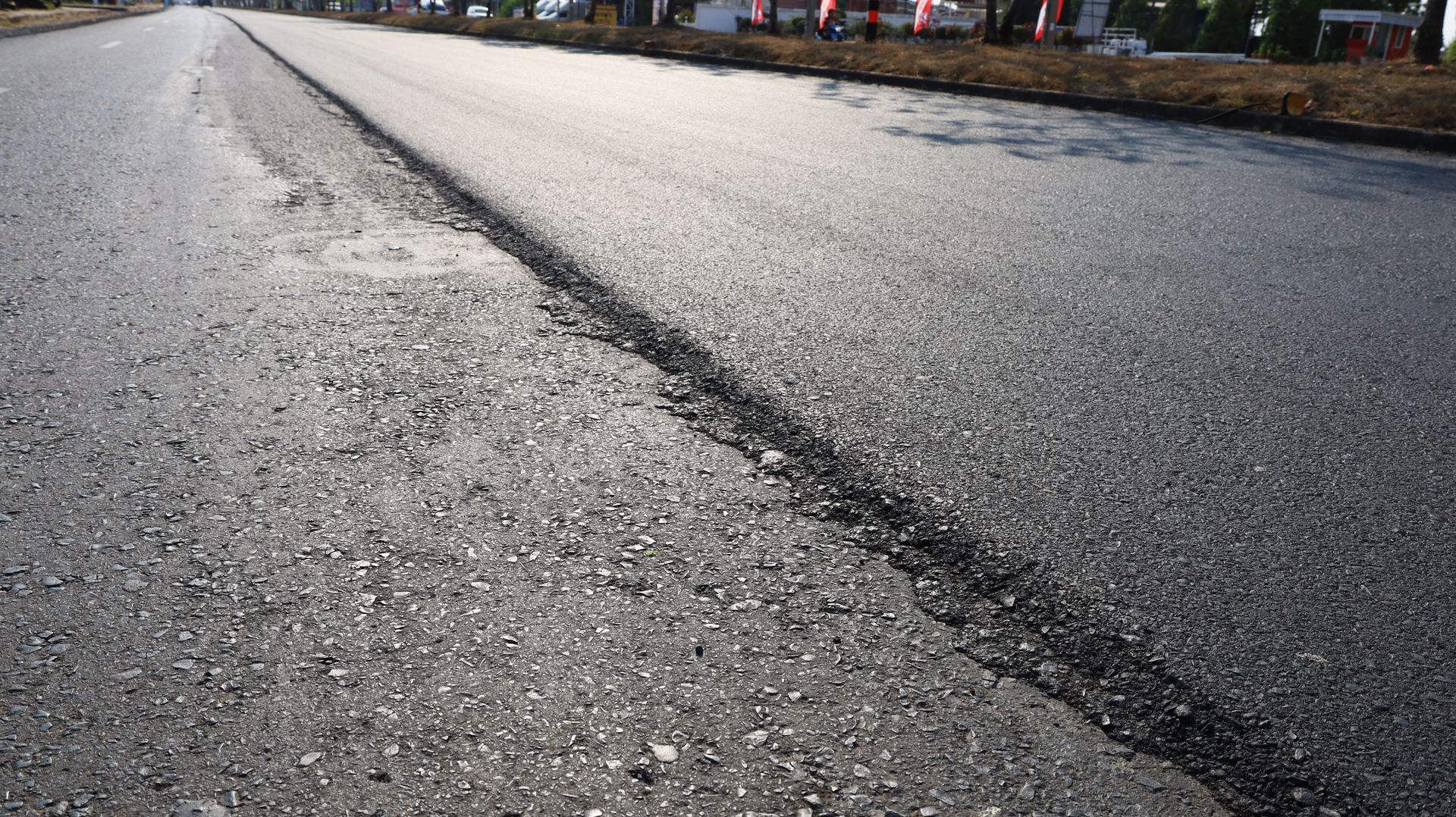
Industrial asphalt installations begin with engineering the pavement structure to match your facility's specific use. Equipment loads are calculated to determine required asphalt thickness and base depth, and high-stress areas like loading docks and truck staging zones receive additional reinforcement. The base is compacted to a higher density than standard commercial work, eliminating voids that allow settling under heavy loads. Asphalt is poured hot and rolled with heavy equipment to achieve the density necessary for industrial performance.
Once complete, your facility operates on pavement that doesn't rut under forklift wheels or crack around loading dock aprons where trucks position repeatedly. Equipment drives on a smooth surface without the jarring transitions caused by failed pavement, and water drains away from building entrances and loading areas without ponding. The surface maintains its integrity through freeze-thaw cycles common in northern Indiana because the dense, thick asphalt layer resists moisture infiltration that leads to cracking.
Industrial paving also includes access roads connecting facilities to public streets and large-scale resurfacing projects that restore pavement without requiring complete base replacement. Loading docks receive special attention where pavement meets concrete structures, with transitions designed to prevent edge failures from repeated trailer impacts.
Common Questions About This Service
Industrial paving decisions involve balancing upfront investment with long-term durability, so understanding what drives performance helps facility managers specify the right solution.
What makes industrial asphalt different from commercial paving?
Industrial asphalt uses thicker lifts and denser compaction to handle concentrated point loads from heavy equipment rather than distributed loads from standard vehicles. The base is also engineered with deeper aggregate layers and higher compaction standards to prevent settling under repetitive stress.
How do you design pavement for specific equipment?
Equipment specifications determine pavement thickness by calculating the weight per axle or contact point and the frequency of loading. Forklifts with small wheels create higher pressure per square inch than tractor-trailers with multiple axles, so different equipment types require different structural designs even at similar total weights.
Can existing industrial pavement be resurfaced?
Resurfacing works when the base remains stable and only the asphalt surface shows wear. Facilities with base failures from years of heavy use require full-depth reconstruction to restore structural capacity and prevent recurring problems.
What causes rutting in loading areas?
Rutting occurs when pavement isn't thick enough or dense enough to resist deformation from equipment wheels turning in the same location repeatedly. Proper compaction during installation and adequate asphalt thickness prevent this type of failure in high-stress zones.
How does industrial paving hold up in Granger's climate?
Dense, thick asphalt resists moisture penetration that causes freeze-thaw damage. Industrial pavement also drains more effectively because it's graded with steeper slopes to move water away from operational areas quickly, reducing the standing water that accelerates deterioration.
Allstate Asphalt provides industrial-grade paving solutions built for the demanding conditions warehouses and manufacturing facilities face daily in Granger. Schedule a site visit to discuss your facility's pavement requirements and equipment loading patterns.