Clear Markings That Organize Traffic Flow
Parking Lot Striping Services in Granger for commercial properties where faded lines create confusion and accessibility compliance issues
Paint striping defines parking spaces, traffic lanes, and pedestrian zones, but northern Indiana winters degrade markings through plow blade scraping, salt exposure, and freeze-thaw stress that lifts paint from the pavement. Fresh striping restores organization to parking areas where faded lines allow vehicles to park at angles that reduce total capacity or block fire lanes. Allstate Asphalt applies traffic paint and thermoplastic markings to retail centers, warehouses, and office complexes in Granger where clear markings improve customer experience and meet ADA requirements for accessible parking.
The service includes layout measurement to maximize parking efficiency, stenciling for handicap symbols and directional arrows, and paint application using equipment that creates straight, consistent lines. Thermoplastic markings last longer than standard paint in high-traffic areas where vehicle tires wear through coatings quickly.
Schedule a lot assessment to review your current striping layout and discuss whether ADA compliance updates are necessary.
What Proper Striping Requires
Striping begins with surface cleaning to remove dirt and oils that prevent paint adhesion, followed by layout marking based on parking space dimensions and traffic flow patterns. Paint or thermoplastic is applied in widths that remain visible after months of traffic wear, with stencils used for symbols that communicate parking restrictions, accessibility zones, and directional guidance. Weather conditions affect curing time—paint needs dry conditions and temperatures above 50 degrees to bond properly to asphalt.
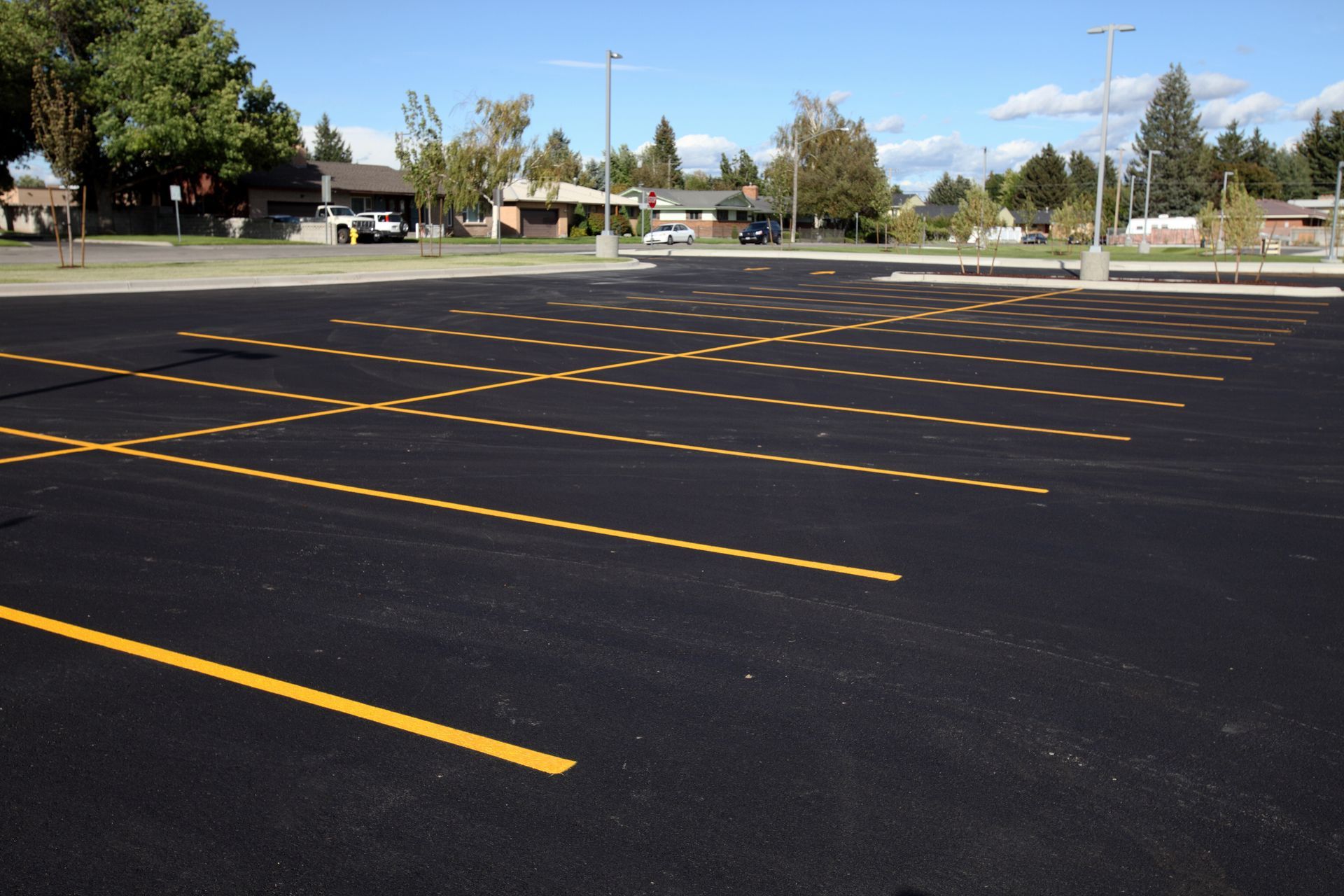
Once markings cure, parking spaces are clearly defined with boundaries that prevent vehicles from encroaching into adjacent spots, and arrows guide traffic flow in directions that reduce congestion at entry and exit points. Handicap spaces display the required symbols and are positioned near accessible entrances according to ADA standards. The white or yellow lines stand out against black asphalt or gray concrete, making the layout immediately obvious to drivers entering the lot.
Re-striping frequency depends on traffic volume and whether snow removal operations scrape the surface during winter. High-traffic retail lots may need annual striping, while office parks with lighter use can extend to two or three years between applications. Thermoplastic markings cost more initially but last two to three times longer than paint, which changes the cost calculation for properties with heavy traffic.
Questions Before Starting Your Project
Striping projects involve layout decisions, material choices, and compliance considerations that affect how the lot functions after completion.
What ADA requirements apply to parking lot striping?
Accessible spaces must be at least eight feet wide with an adjacent five-foot access aisle, marked with vertical signs and pavement symbols, and located on the shortest accessible route to the building entrance.
How does thermoplastic striping differ from paint?
Thermoplastic is heated and applied as a thick layer that cools into a durable surface, lasting two to three times longer than standard traffic paint and resisting damage from snow plows better than thinner coatings.
When should parking lots be re-striped?
Re-striping becomes necessary when lines fade to the point that drivers can't distinguish space boundaries, which typically happens after one to three years depending on traffic volume and winter maintenance practices in Granger.
What layout changes can improve parking capacity?
Adjusting space dimensions, switching from angled to perpendicular parking, and reconfiguring drive lanes can increase total spaces, though changes must maintain adequate maneuvering room and comply with local regulations.
How long before the lot can be used after striping?
Paint typically dries enough for light traffic within 30 to 60 minutes, though full curing takes several hours, while thermoplastic cools and hardens within minutes after application.
Allstate Asphalt measures your parking area and develops a striping plan that maximizes space efficiency while maintaining compliance with accessibility standards and local codes. Contact us to discuss layout options and review whether your current markings meet ADA requirements for accessible parking.